



 Arts & Culture
The Gulf region is renowned for its futuristic skylines and luxurious destinations, but beneath its modern landscape lies a rich cultural heritage that has been preserved for centuries. Traditional arts, crafts, and customs remain an essential part of everyday life across countries such as the United Arab Emirates, Saudi Arabia, Qatar, Bahrain, Kuwait, and Oman. These cultural treasures reflect the region’s history, values, and deep connection to the desert and the sea.
Whether you’re exploring heritage villages, bustling souks, or cultural festivals, discovering the Gulf’s traditions offers a fascinating glimpse into its vibrant past.
The Importance of Gulf Heritage
For generations, the people of the Gulf relied on craftsmanship, storytelling, and community traditions to preserve their identity. Many of these customs originated from Bedouin lifestyles, pearl diving communities, and coastal trade routes that connected the Gulf to Asia, Africa, and Europe.
Today, governments across the Gulf actively preserve these traditions through museums, cultural festivals, heritage centers, and artisan workshops.
Traditional Arts of the Gulf
Arabic Calligraphy
Arabic calligraphy is one of the most admired artistic expressions throughout the Gulf. More than beautiful writing, it represents spirituality, culture, and creativity. Visitors can admire intricate calligraphy in:
- Mosques
- Museums
- Public art installations
- Luxury hotels
- Traditional homes
Many local artists continue creating stunning modern interpretations of classical Arabic scripts.
Islamic Geometric Art
Islamic geometric patterns decorate countless buildings across the Gulf. These intricate designs symbolize harmony, balance, and mathematical precision.
You’ll find geometric art featured on:
- Palace walls
- Mosque ceilings
- Wooden doors
- Ceramic tiles
- Architectural facades
Modern architects continue incorporating these timeless patterns into contemporary buildings.
Sadu Weaving
Sadu weaving is one of the Gulf’s oldest textile traditions. Practiced primarily by Bedouin women, it uses colorful wool to create striking geometric patterns.
Traditionally, Sadu textiles were used for:
- Tent decorations
- Rugs
- Camel accessories
- Cushions
- Blankets
Today, Sadu designs appear in luxury fashion, home décor, and cultural exhibitions.
Pottery Making
Pottery has been part of Gulf life for centuries. Before modern storage containers, handcrafted clay pots were used for:
- Water storage
- Cooking
- Dates
- Spices
- Household items
Many artisan villages still demonstrate traditional pottery-making techniques.
Traditional Crafts of the Gulf
Pearl Jewelry
Before oil transformed the Gulf economy, pearl diving was the region’s primary industry.
Skilled craftsmen created beautiful jewelry using natural pearls collected from the Arabian Gulf. Even today, pearl jewelry remains one of the Gulf’s most iconic handcrafted products.
Visitors can purchase authentic pearl jewelry from heritage markets and specialty boutiques.
Dhow Building
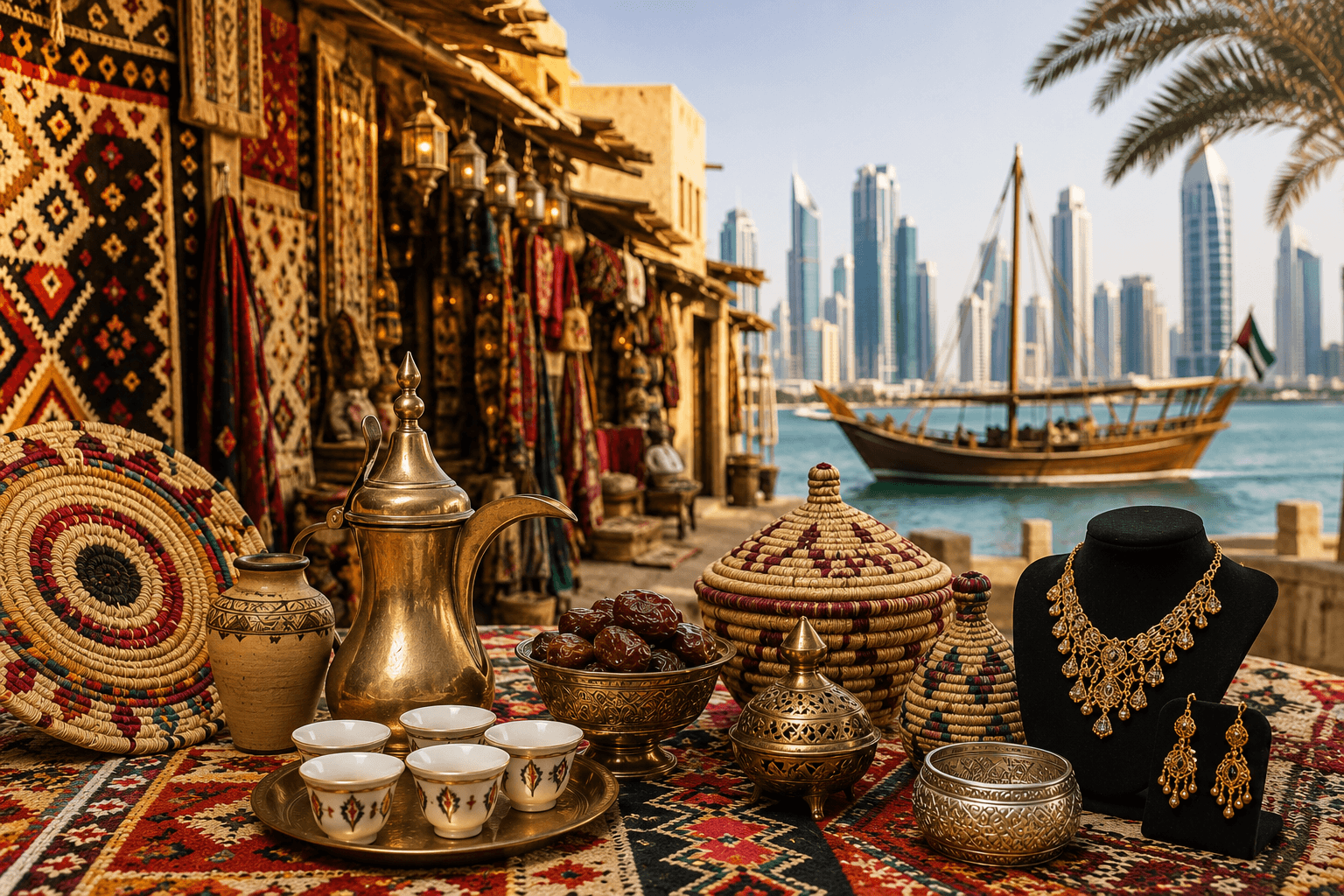
The dhow is a traditional wooden sailing boat that once connected the Gulf with India, East Africa, and Southeast Asia.
Expert craftsmen continue building these vessels using traditional woodworking techniques passed down through generations.
Today, many restored dhows offer scenic cruises while preserving this remarkable maritime heritage.
Palm Weaving
Date palms have long been considered the “tree of life” in the Gulf.
Local artisans weave palm leaves into practical household items including:
- Baskets
- Mats
- Fans
- Storage containers
- Decorative accessories
These eco-friendly crafts remain popular souvenirs.
Silver and Gold Craftsmanship
Gulf artisans are famous for creating handcrafted jewelry featuring:
- Gold
- Silver
- Precious stones
- Intricate Arabic patterns
Traditional jewelry designs often symbolize family heritage and regional identity.
Traditional Gulf Customs
Arabic Hospitality
Hospitality is one of the Gulf’s most cherished customs.
Guests are warmly welcomed with:
- Arabic coffee (Gahwa)
- Fresh dates
- Traditional sweets
- Incense (Bakhoor)
Offering coffee is a symbol of respect, friendship, and generosity.
Majlis Culture
The Majlis is a traditional gathering place where families, friends, and community members meet to discuss important matters, share stories, and welcome guests.
Although modern lifestyles have evolved, the Majlis remains central to Gulf social life.
Falconry
Falconry has been practiced in the Gulf for thousands of years.
Originally used for hunting in the desert, it has become a respected cultural tradition and competitive sport. Visitors can watch falcon demonstrations at heritage festivals and dedicated falcon centers.
Traditional Music and Dance
Music plays a vital role in Gulf celebrations.
Popular traditional performances include:
- Ardah sword dance
- Al-Ayyala folk dance
- Sea-inspired pearl diving songs
- Bedouin poetry recitals
These performances celebrate history, bravery, and community spirit.
Traditional Clothing
Traditional clothing reflects the Gulf’s climate and cultural values.
Men
- Kandura (or Thobe)
- Ghutra or Shemagh headscarf
- Agal (black cord securing the headscarf)
Women
- Abaya
- Shayla
- Elegant embroidered dresses for celebrations
Traditional attire continues to be proudly worn alongside modern fashion.
Traditional Food Customs
Meals in the Gulf are often shared with family and guests, reflecting strong community values.
Traditional dishes include:
- Machboos
- Harees
- Madrooba
- Luqaimat
- Grilled seafood
- Fresh dates
Sharing food remains one of the strongest expressions of hospitality.
Cultural Festivals Worth Experiencing
Visitors can experience Gulf traditions during annual cultural festivals featuring:
- Artisan markets
- Camel races
- Falcon competitions
- Folk music performances
- Traditional dance shows
- Heritage villages
- Local cuisine demonstrations
- Handicraft exhibitions
These events provide an authentic opportunity to engage with Gulf culture and meet local artisans.
Why These Traditions Matter Today
Despite rapid modernization, the Gulf continues to celebrate its cultural roots. Schools, museums, cultural organizations, and governments actively promote traditional arts and crafts, ensuring they remain relevant for future generations.
For travelers, experiencing these customs adds depth to any Gulf journey, offering meaningful connections beyond iconic skyscrapers and luxury shopping.
Final Thoughts
The Gulf is a region where tradition and innovation coexist beautifully. From intricate Arabic calligraphy and colorful Sadu weaving to warm hospitality, pearl craftsmanship, and vibrant cultural festivals, every tradition tells a story of resilience, creativity, and pride.
Exploring the traditional arts, crafts, and customs of the Gulf allows visitors to appreciate the rich heritage that continues to inspire modern Gulf societies. Whether wandering through ancient souks, attending a heritage festival, or sharing a cup of Arabic coffee with locals, you’ll discover a culture that warmly welcomes the world while honoring its remarkable past.
Suggested SEO Keywords: Traditional Gulf culture, Gulf arts and crafts, Gulf customs, Arabian heritage, Gulf traditions, Arabic calligraphy, Sadu weaving, Gulf handicrafts, Middle East cultural experiences, traditional Gulf lifestyle.


Comments are closed